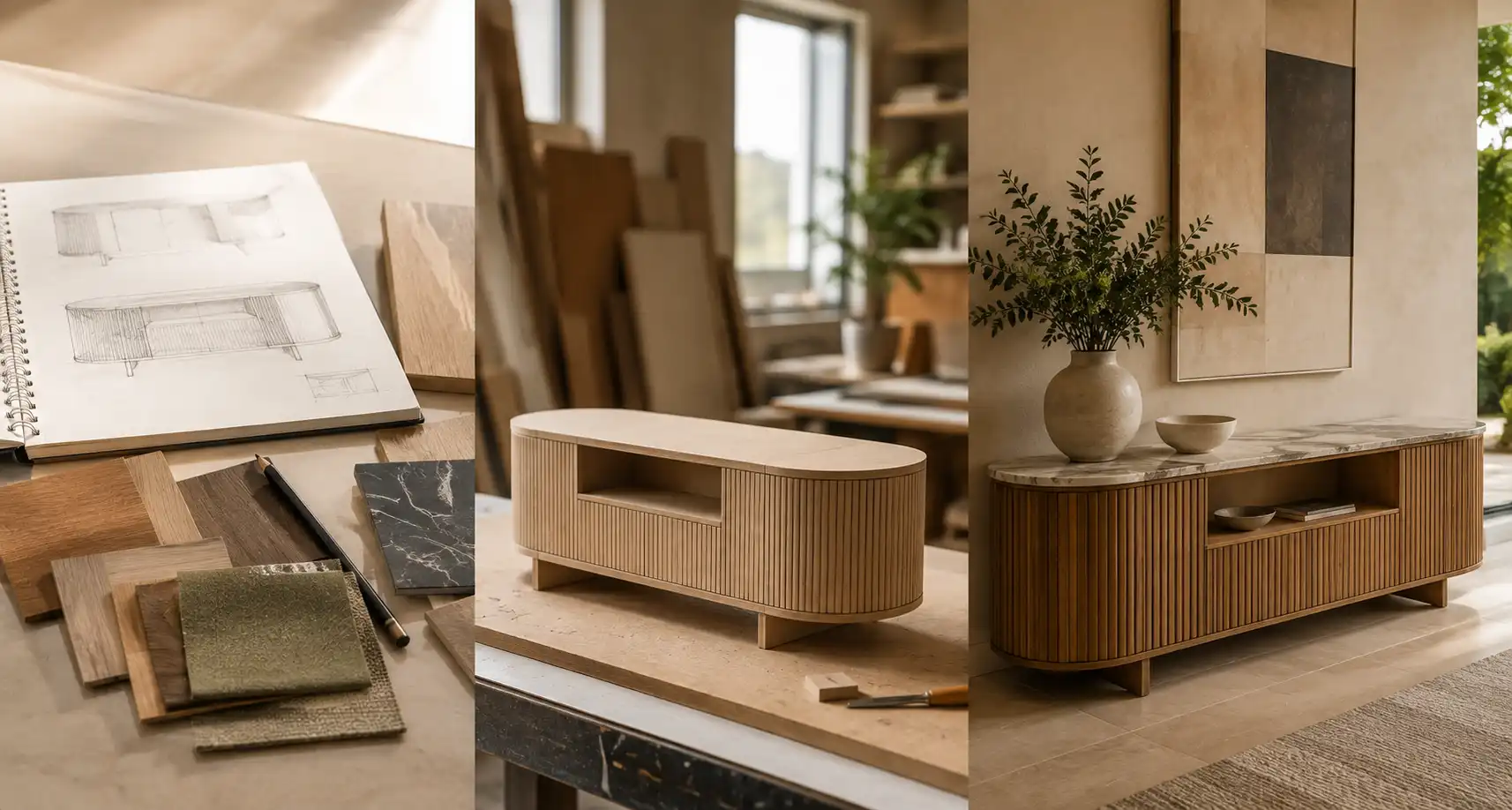
The furniture design process runs through six connected stages: brief and measurements, concept sketches, material and structural detailing, technical drawings, prototyping, and fabrication with final quality checks. Each stage builds on the one before it, which is why skipping steps like prototyping usually shows up as a problem later, not earlier.
A finished piece of furniture is the result of several decisions made in sequence, not one moment of inspiration. Understanding that sequence helps you know what to expect, and when.
The furniture design process runs from a rough idea to a finished, physical piece, through a series of connected stages. Skipping any one of them usually shows up as a problem later.
Most people only see the finished result, so the process in between can feel a bit mysterious. It isn’t complicated, just sequential.
This guide focuses on the furniture design process itself, stage by stage.
For a broader look at furniture design as a discipline, what is furniture design is a useful starting point.
What the Furniture Design Process Actually Covers
A typical process runs through six connected stages, from the first brief to a finished piece ready for delivery.
Stage 1: Brief and Measurements
This stage covers what the piece needs to do, who’ll use it, and the exact space it has to fit. Rough dimensions aren’t enough here; a piece built to the wrong size never gets a second chance.
Stage 2: Concept Sketches
This stage explores form and proportion through rough sketches, before the designer chooses any material. It’s where a designer tests several directions quickly and cheaply, on paper rather than in the workshop.
Stage 3: Material and Structural Detailing
This stage decides what the piece is actually made from, and how it holds together and holds weight.
Choosing Materials for the Space
Material choice depends on how people will use the piece, and where it sits. A guide to custom furniture materials in the UAE covers how local heat and humidity affect this decision.
Working Out Load and Joints
This is where the piece gets its structural backbone: joint types, load points and how the frame handles daily wear. It’s not visible in the finished piece, but it’s what makes the piece last.
This overlaps closely with custom joinery work, though joinery attaches to the building itself rather than standing freestanding.
Stage 4: Technical Drawings
This stage turns the concept into drawings a workshop can actually build from, with exact dimensions and construction details. A 3D layout can reduce revisions later, catching problems on screen instead of on the workshop floor.
Stage 5: Prototyping
This stage builds a small-scale or full-size sample before committing to final production. It’s the last chance to catch proportion or comfort issues while they’re still cheap to fix.
Why Prototypes Matter More Than People Expect
A drawing can look perfectly proportioned and still feel wrong once it’s built at full scale. Prototyping catches that gap before it becomes an expensive, finished mistake.
Stage 6: Fabrication and Final Quality Checks
This is the stage most people picture when they think of furniture design, but it’s actually the last of six.
What Happens During Fabrication
A workshop builds the piece against the approved drawings, checking dimensions, joints and finish quality at every step.
Final Checks Before Delivery
The last check happens before delivery, not after. It often ties into fit-out coordination if the piece is part of a larger project.
How Long Does This Whole Process Take?
A single piece typically takes several weeks from brief to delivery, depending on complexity. A realistic interior design timeline in the UAE accounts for lead times that people often underestimate.
A Dubai Scenario: A Custom Piece From Start to Finish
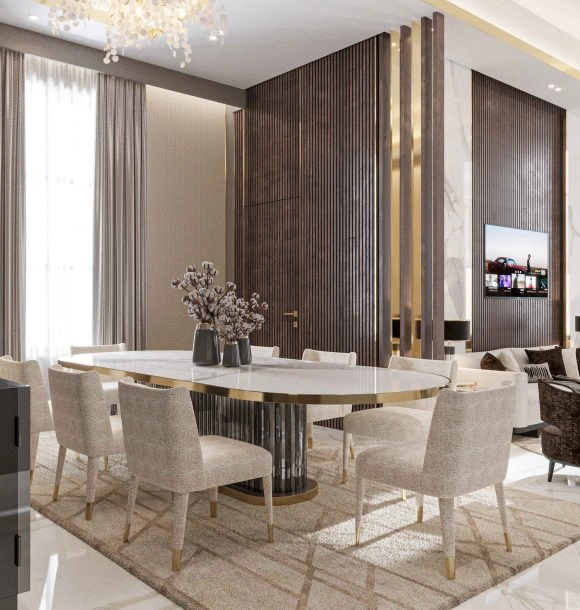
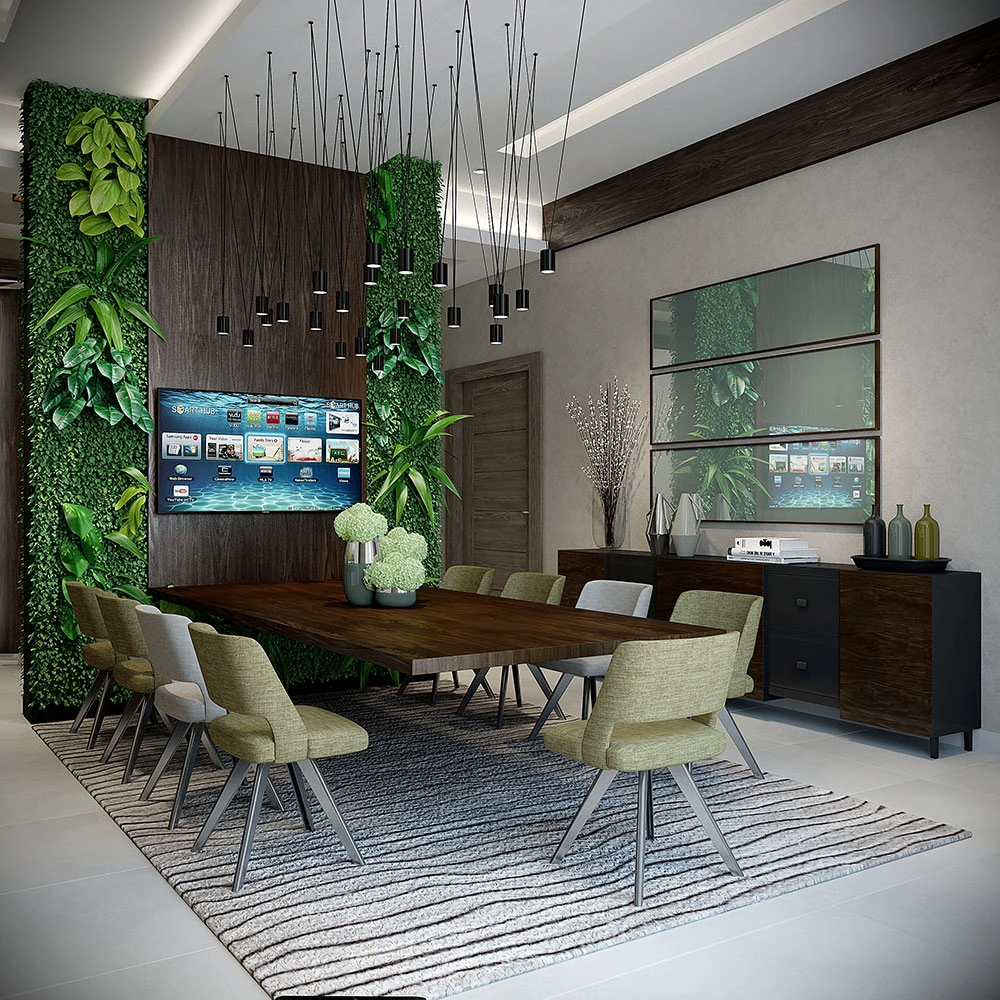
Consider a family who wanted a custom dining table for an oddly shaped nook in their villa interior in Dubai Hills. Off-the-shelf tables either left wasted space or blocked the walkway.
The process ran through all six stages. That meant measuring the nook, sketching three shapes, and choosing a heat-resistant timber. It also meant drawing the final form, testing a full-size cardboard prototype, and building the piece. The finished table fit exactly, something no showroom purchase could have matched.
Common Mistakes That Disrupt the Process
A few mistakes come up repeatedly during a furniture design project:
- Skipping the brief stage and jumping straight to sketches
- Choosing materials before structural detailing is finalised
- Treating a prototype as optional to save time
- Approving technical drawings without checking them against the original brief
- Assuming fabrication can start before drawings are fully signed off
A closer look at common interior design mistakes to avoid covers several patterns that apply here too.
What This Process Costs at Each Stage
Cost builds up across the same six stages, not just at fabrication. Design time, prototyping and materials all add up before a workshop builds a single piece.
Understanding what typically drives interior design costs in the UAE helps you see where that spend actually goes.
Frequently Asked Questions
Q1: What are the main stages of the furniture design process?
A: Brief and measurements, concept sketches, material and structural detailing, technical drawings, prototyping, and fabrication with final quality checks. Each stage builds on the one before it.
Q2: Is prototyping really necessary, or can it be skipped to save time?
A: It can be skipped, but it usually isn’t worth it. Prototyping catches proportion and comfort issues while they’re still cheap to fix, before fabrication makes them expensive.
Q3: How long does a single custom furniture piece take to design and build?
A: Typically several weeks from initial brief to delivery, depending on complexity. Custom joinery and material lead times usually set the pace, more than the design work itself.
Q4: Can I skip the technical drawings stage if I already like the concept sketch?
A: No, and skipping it usually costs more later. A workshop needs exact dimensions and construction details to build from, not just a rough concept sketch.
Q5: Which stage of the process usually costs the most?
A: Fabrication usually costs the most, since it covers labour and materials rather than just planning. Design, drawings and prototyping still add real cost before that stage even starts.
CONCLUSION
Ready to Take a Piece From Concept to Reality?
Every finished piece of furniture worked through the same six stages, whether anyone noticed it happening or not. Understanding that process makes it easier to know what a fair timeline and price actually look like.
La Firma’s custom furniture team in Dubai can walk a piece through every stage. That runs from the first brief to the finished delivery.