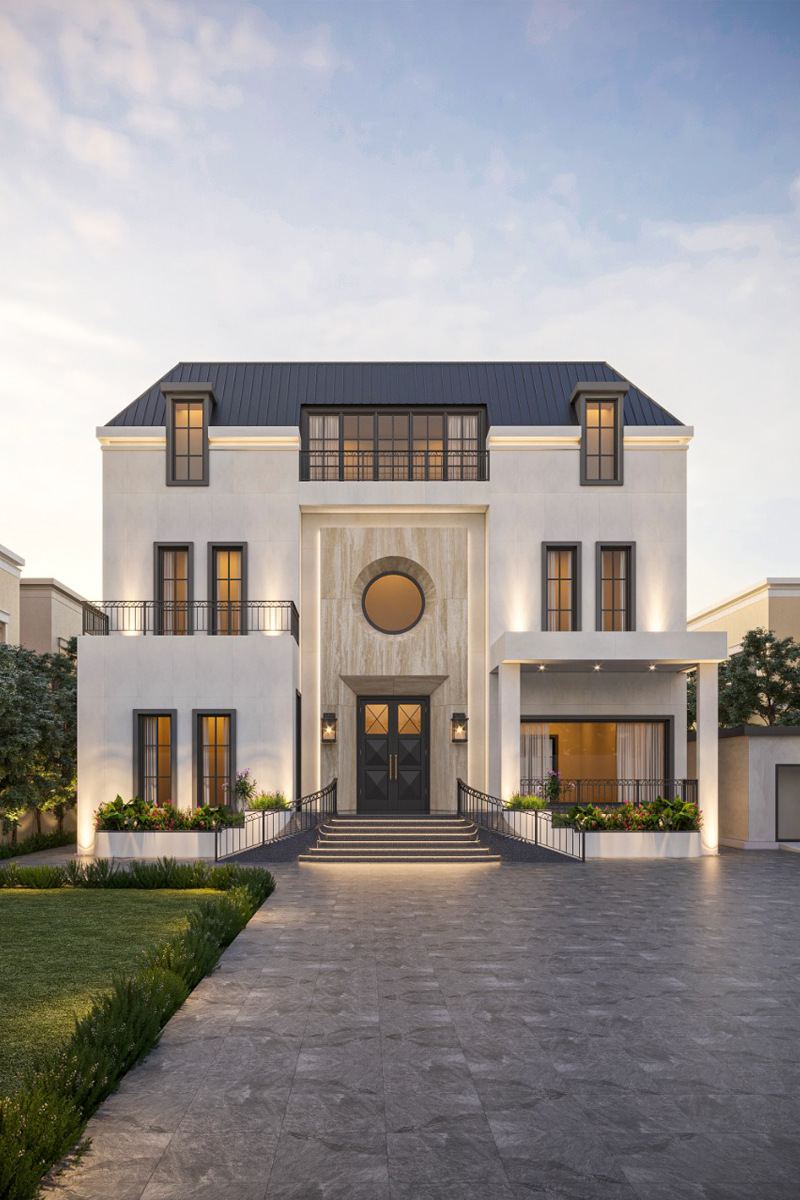
A driveway or outdoor paved area does more work than most homeowners expect. It handles daily vehicle weight, direct UAE sun for most of the year, and the occasional heavy rain that needs somewhere to drain. Interlock pavers in Dubai have become the default choice for driveways, courtyards, and pool surrounds because they handle all three better than poured concrete, without the higher cost of natural stone.
Interlock pavers are individual concrete or stone units laid in an interlocking pattern over a compacted base, rather than poured as one continuous slab. This makes them easier to repair, more resistant to cracking from heat expansion, and available in enough patterns and finishes to match almost any villa exterior. Getting the base preparation and material grade right matters more than the pattern you pick.
With outdoor renovation work picking up across Dubai as the cooler months make exterior projects easier to schedule, many villa owners are tackling driveways, courtyards, and garden paths alongside other exterior updates. If you’re planning a broader outdoor refresh, our villa garden design work often runs alongside paving decisions, since the two need to read as one connected exterior rather than separate projects.
This article walks through how interlock pavers work, which patterns and materials suit UAE conditions, and what actually drives the cost up or down.
What Are Interlock Pavers, and Why Are They So Common in Dubai
Interlock pavers are precast concrete or natural stone units, usually rectangular, square, or shaped in interlocking geometry, laid over a compacted sand and aggregate base. Unlike poured concrete, which cures as one continuous surface, each paver sits independently, locked in place by the units around it and a layer of jointing sand between them.
This structure gives interlock paving a few practical advantages in UAE conditions. Individual units can expand and contract slightly with temperature swings without cracking the whole surface, which matters given how much Dubai’s ground temperature shifts between summer and winter. If one paver cracks or stains, it can be lifted and replaced without disturbing the surrounding area, something that is far more difficult with a poured slab.
Popular Interlock Paver Patterns for Dubai Driveways
Pattern choice affects both the visual result and how well the paving holds up under vehicle weight. A herringbone pattern, where pavers interlock at an angle, is widely used for driveways because the diagonal arrangement distributes vehicle load more evenly than a straight running bond. This makes it a practical choice for daily driving, not just a decorative option.
Running bond patterns, where pavers line up in straight, offset rows, suit walkways, courtyards, and lower-traffic areas better than driveways. The look is cleaner and more minimal, which works well alongside a contemporary villa exterior, but it handles concentrated vehicle weight less evenly than herringbone.
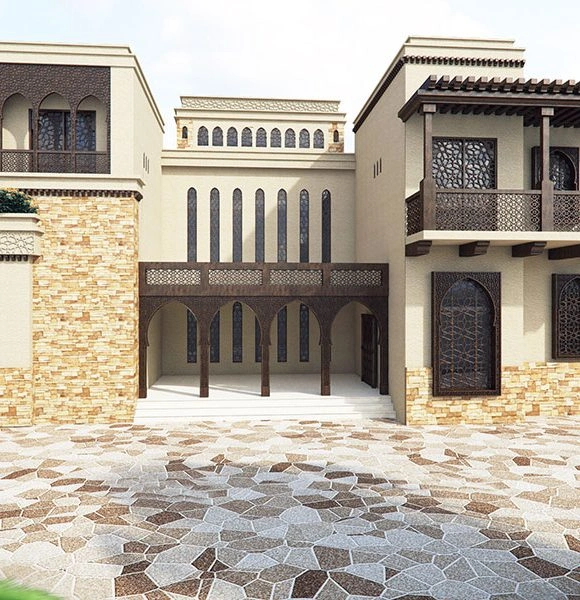
Basketweave and circular fan patterns tend to appear in courtyards, pool surrounds, and entrance areas where the paving is more decorative than functional. These patterns photograph well and suit a more traditional or Arabic-influenced exterior, but they’re generally not recommended for driveways carrying regular vehicle traffic.
Choosing Materials That Hold Up to UAE Conditions
Material selection affects durability more than most homeowners realize until a few summers pass. Concrete pavers remain the most common choice in Dubai because they’re cost-effective, available in a wide color range, and hold up reasonably well to heat, provided they’re manufactured with UV-resistant pigments. Cheaper pavers without proper UV treatment tend to fade or chalk within a couple of years under constant sun exposure.
Natural stone pavers, like granite or sandstone, cost more upfront but resist fading entirely since the color runs through the stone rather than sitting on a pigmented surface layer. Granite in particular handles heavy vehicle weight and heat well, making it a common choice for villa driveways where longevity matters more than initial cost.
One detail that often gets overlooked in Dubai paving projects is how finish affects heat retention. Darker pavers absorb more heat and can become uncomfortably hot to walk on barefoot around a pool deck, while lighter, textured finishes stay cooler and also hide dust buildup better between cleanings.
Interlock Pavers vs Poured Concrete vs Natural Stone
| Factor | Interlock Pavers | Poured Concrete | Natural Stone |
|---|---|---|---|
| Repair ease | High, individual units replaceable | Low, cracks often need full resurfacing | Moderate, depends on supply match |
| Heat and UV resistance | Good with UV-treated pigments | Moderate, prone to surface cracking | Excellent, color doesn’t fade |
| Upfront cost | Moderate | Lower | Higher |
| Pattern flexibility | High, many layout options | Limited to surface finishing | High, but fewer standard patterns |
| Drainage performance | Good, joints allow water movement | Requires sloped design and drains | Good, similar to pavers |
Interlock pavers generally sit as the practical middle ground, offering better repairability and drainage than poured concrete, at a lower cost than full natural stone, while still giving you real pattern and finish flexibility.
A Real Dubai Scenario: Getting the Base Wrong
A villa owner in Arabian Ranches had interlock pavers installed for a new driveway, choosing a mid-range concrete paver in a herringbone pattern. Within eighteen months, sections of the driveway began sinking unevenly, creating noticeable dips near the garage entrance.
The problem wasn’t the pavers themselves. The contractor had skimped on base compaction, using an insufficient layer of aggregate beneath the sand bedding. Without a properly compacted base, the pavers above it settle unevenly under repeated vehicle weight, no matter how good the paver quality is. Reworking the driveway meant lifting the affected section, correcting the base, and relaying the same pavers, a cost that proper base preparation would have avoided entirely.
Common Mistakes When Planning an Interlock Paver Driveway
The most frequent mistake is treating base preparation as a minor step compared to paver selection. A poorly compacted base causes settling, shifting, and drainage problems regardless of how expensive the pavers are. Ask any contractor specifically how many centimeters of compacted aggregate base they plan to use before installation, not just which paver brand they’re quoting.
Another common mistake is ignoring drainage slope during design. Driveways and courtyards need a slight gradient, usually just a couple of percent, directing water away from the villa rather than pooling against the foundation. This matters more than it seems during the UAE’s occasional heavy rain events, when poor drainage design becomes immediately obvious.
Choosing paver color purely for appearance without considering heat retention is a third common oversight, especially for pool surrounds and walkways where people walk barefoot. A beautiful dark paver that becomes too hot to use for half the year isn’t solving the problem it was chosen for.
What Actually Drives Interlock Paving Cost in Dubai
Paver material grade is the most obvious cost factor, with basic concrete pavers costing significantly less than premium UV-treated concrete or natural stone options. But material alone doesn’t determine the final cost. Base preparation, including excavation, aggregate layering, and compaction, often represents a substantial portion of the total project cost, even though it’s invisible once the pavers go down.
Pattern complexity also affects labor cost. A straightforward running bond installs faster than an intricate herringbone or mixed-pattern design, since more cuts and precise alignment work goes into complex layouts. Area size matters too, with larger driveways benefiting from some economy of scale on material pricing, while small, irregularly shaped areas often cost more per square meter due to additional cutting and waste.
Where homeowners commonly overspend is choosing premium natural stone for an entire large driveway when a combination approach, natural stone as a border or feature strip with quality concrete pavers filling the main area, achieves a similar high-end look at a lower total cost. Where cutting corners creates problems is skimping on base preparation to save money upfront, which almost always costs more to fix later than it would have cost to do properly the first time.
Maintaining Interlock Pavers in UAE Conditions
Regular sweeping and occasional pressure washing keep most interlock paving looking fresh, since dust accumulation is the main maintenance challenge in Dubai’s climate rather than moisture-related issues common in wetter regions. Resealing every few years helps maintain color and resist staining, particularly for driveways exposed to oil drips or tire marks.
Jointing sand between pavers can wash out gradually over time, especially around high-traffic areas or where water tends to collect. Topping up jointing sand periodically keeps the interlocking structure stable and prevents individual pavers from shifting under vehicle weight.
Planning Paving Alongside Your Wider Villa Exterior
Driveway and paving decisions rarely sit in isolation from the rest of a villa’s exterior design. Matching paver tones to your home’s facade, garden hardscaping, or pool deck creates a cohesive look rather than a driveway that feels disconnected from everything around it. If you’re planning paving as part of a larger exterior or renovation project, reviewing what to check before renovating a home in Dubai helps make sure approvals and sequencing are sorted before any ground gets broken.
For villa owners tackling paving alongside a full exterior refresh, coordinating the two means the finished result reads as one connected design rather than a driveway bolted onto an otherwise unrelated property.
Frequently Asked Questions
Q1: What is the best paver pattern for a Dubai driveway?
A: Herringbone is generally the most practical choice for driveways, since the angled interlocking pattern distributes vehicle weight more evenly than straight running bond patterns. Running bond and decorative patterns suit lower-traffic walkways and courtyards better.
Q2: How much do interlock pavers cost in Dubai?
A: Costs vary based on material grade, pattern complexity, and area size. Basic concrete pavers cost less than UV-treated or natural stone options, and base preparation often represents a significant portion of total project cost beyond the paver material itself.
Q3: Do interlock pavers crack in Dubai’s heat?
A: Quality interlock pavers handle UAE heat well because individual units can expand and contract slightly without cracking the whole surface, unlike poured concrete. Cracking issues usually trace back to poor base compaction rather than the pavers themselves.
Q4: How long do interlock pavers last in the UAE?
A: With proper base preparation and quality materials, interlock pavers typically last well over a decade with normal maintenance. Lifespan depends heavily on base compaction quality, paver grade, and how consistently jointing sand gets maintained over time.
Q5: Can individual interlock pavers be replaced if damaged?
A: Yes, this is one of the main advantages of interlock paving over poured concrete. A cracked or stained paver can be lifted and replaced individually without disturbing the surrounding surface, provided matching replacement units are available.
Ready to Plan Your Driveway or Outdoor Space?
Interlock pavers give Dubai villa owners a durable, repairable, and visually flexible option for driveways, courtyards, and pool surrounds, provided the base preparation gets the attention it deserves. Getting the pattern, material, and drainage right from the start saves far more than it costs compared to fixing a poorly built surface later.
If you’re planning paving as part of a broader exterior or villa renovation project, La Firma’s home interior design and exterior planning work helps make sure your driveway, garden, and home all read as one connected design. Explore more of our work at lafirma.ae.