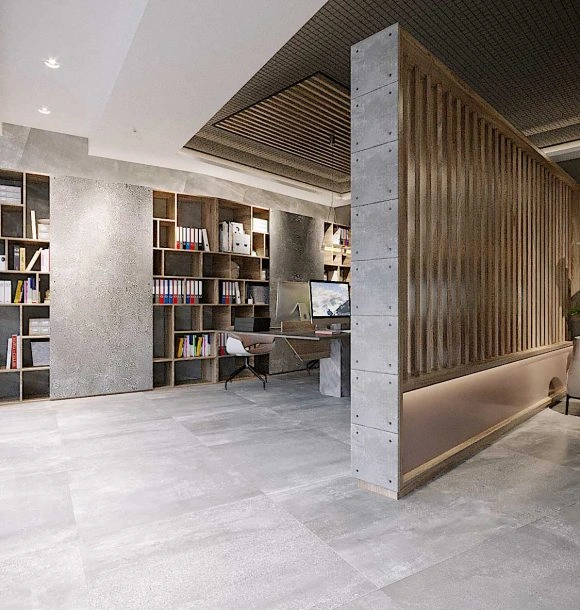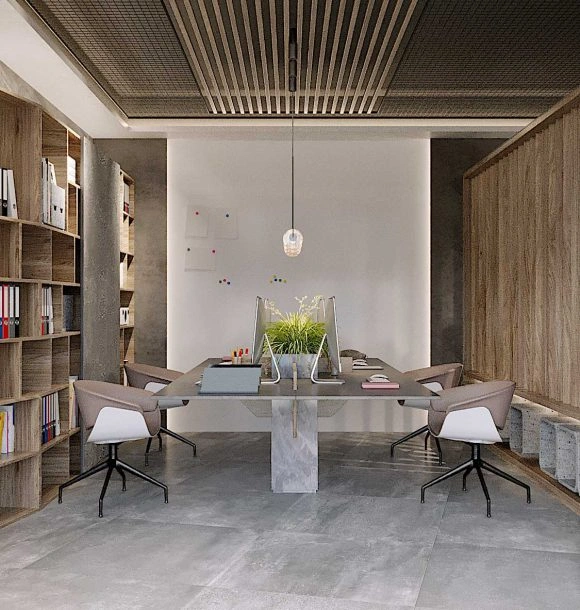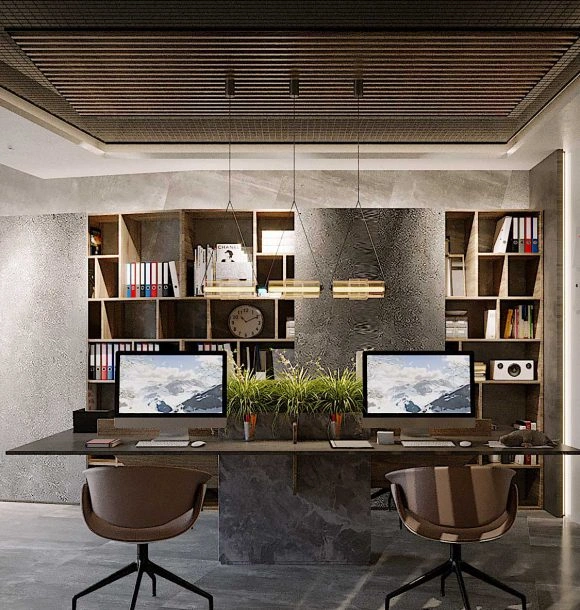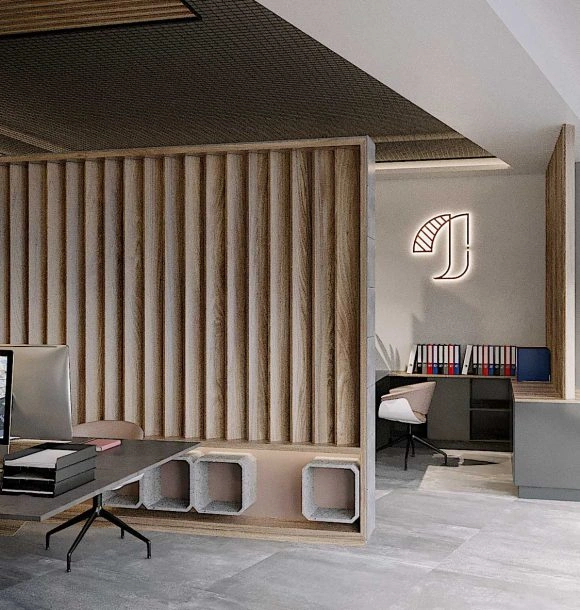
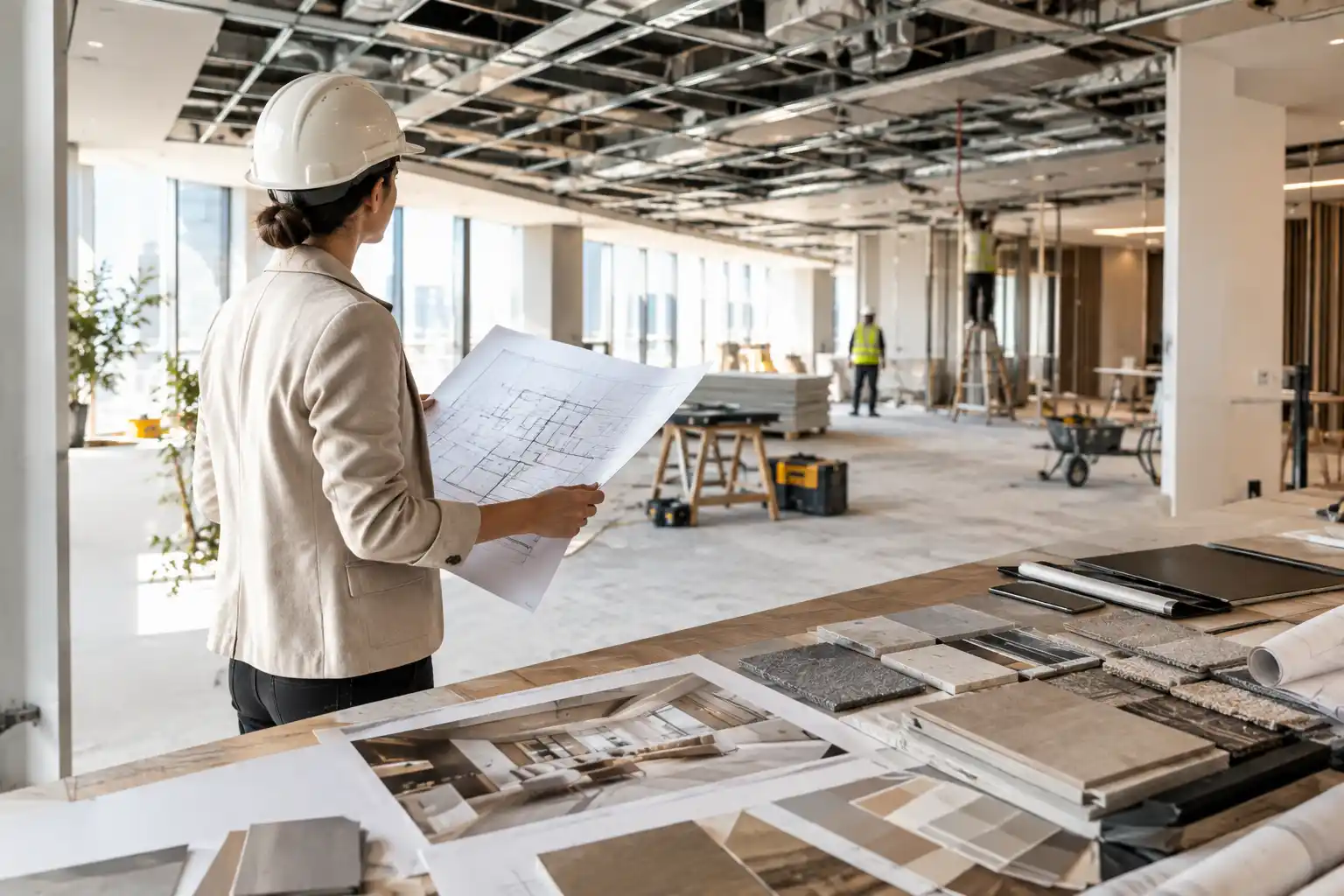
Fit-out project management means one team stays accountable for a project from the first design conversation through final handover. That team keeps everyone working from one current set of drawings, controls risk before it becomes a delay, and reports progress continuously. For what happens at each stage, see our breakdown of the main fit-out stages. This guide focuses on the management thread that connects those stages.
This guide is written for UAE business owners and homeowners in the interior fit-out industry, specifically those comparing fit-out companies or reviewing a project proposal. Use it when you want to understand what genuine fit-out project management includes, beyond construction alone. It supports one clear decision: choosing a company that manages your project end-to-end, not one that only executes a single phase. Main takeaway: strong fit-out project management prevents the coordination gaps that cause most delays and cost overruns.
Most fit-out proposals list stages. Few explain who actually manages the connections between them. That gap is exactly where fit-out project management earns its value. La Firma and companies like it build trust by owning the whole journey as one continuous responsibility, not a handoff between separate teams.
- Fit-out project management keeps design, construction, risk, and communication aligned continuously, not just stage by stage.
- One accountable team removes the coordination gaps that appear when design and construction sit with separate companies.
- Good fit-out project management catches risk and change early, before either becomes a delay.
- Continuous quality checks, not just a final walkthrough, catch most problems while they’re still cheap to fix.
- This guide supports UAE businesses and homeowners evaluating fit-out companies on how well they manage a project, not just what they build.
What Does Fit-Out Project Management Actually Involve?
Fit-out project management means one team owns the project’s direction and quality from the first design conversation to the final walkthrough.
This differs from simply completing each stage well. A designer can produce excellent concepts. A contractor can build precisely. The project can still run into trouble if no one owns the space between those two roles. Fit-out project management fills that space. It handles the decisions, communication, and oversight that keep the original design intent intact through construction and into a finished space.
Why Does Fit-Out Project Management Depend on One Accountable Team?
A single accountable team removes the natural gaps that appear when a separate designer and a separate contractor divide a project between them.
Splitting design and construction across two companies creates a handoff point. The contractor didn’t make the original design decisions, so questions get answered on-site instead of by the person who made the call. A turnkey fit-out approach removes this gap. The same team resolves design intent and buildability before construction starts. Our comparison of a fit-out company versus a standalone contractor explains this difference in more depth.
How Does Fit-Out Project Management Keep Design and Construction Aligned?
The project team treats the approved drawings as the single source of truth and checks live construction against them continuously, not just at the end.
Every trade on site should build from the same current drawing version. When a discrepancy shows up, someone with real authority resolves it fast. They don’t let the site team guess. This is where construction supervision earns its place. It catches misalignment while it’s still cheap to fix, not after the wall closes.
How Does Fit-Out Project Management Handle Risk and Change?
The team plans for where projects usually slip, mainly approvals, material lead times, and mid-project changes, and builds a buffer around each one before work even starts.
- The team builds approval timelines into the schedule early. Approval speed varies by property type and jurisdiction, so nobody assumes it will move quickly.
- The team orders long lead-time items as soon as designs lock. Custom joinery and imported materials often take the longest to arrive.
- Every change request follows one documented path. This way, a material swap or layout tweak reaches everyone affected, not just whoever approved it first.
- The team escalates decisions quickly. A stalled decision on site usually costs more than the decision itself.
Our guide on what to expect for a fit-out’s timeline shows how much of this risk planning happens before construction starts.
How Does the Client Stay Informed During Fit-Out Project Management?
A consistent update rhythm keeps the client informed, not just a message when something goes wrong.
Regular, predictable check-ins let clients see real progress and raise concerns early, while problems are still easy to fix. A client who only hears from the team at major milestones will likely feel blindsided by a delay. A client who gets steady updates rarely does.
Continuous Fit-Out Project Management vs. Stage-by-Stage Execution: What’s the Difference?
Stage-by-stage execution completes each phase correctly on its own. Fit-out project management keeps every phase connected to the ones before and after it.
| Continuous Fit-Out Project Management | Stage-by-Stage Execution Only | |
|---|---|---|
| Design-to-build handoff | One team, minimal ambiguity | Separate handoff, more room for error |
| Progress visibility | Regular updates throughout | Updates mainly at milestones |
| Change requests | One documented path, reaches everyone | Can get lost between parties |
| Risk planning | Anticipated and buffered early | Discovered as it happens |
| Accountability | One team, start to finish | Split across separate vendors |
If a proposal describes stages but never explains who manages the connections between them, ask about that directly before you sign.
How Is UAE’s Growing Fit-Out Market Raising the Bar for Project Management?
As the UAE’s commercial fit-out market keeps expanding, project teams face more coordination pressure, which makes strong fit-out project management matter more, not less.
Current market research puts the UAE’s interior fit-out sector at close to USD 10 billion overall. The commercial segment alone is projected to grow from roughly USD 1.58 billion in 2022 to around USD 3.11 billion by 2030. New Grade A office supply across DIFC and Business Bay is driving much of that growth, since occupiers want interiors that match a premium address. That volume puts real pressure on contractor capacity, material lead times, and approval processing. A well-managed, single-team project absorbs that pressure far better than a fragmented one does.
What Mistakes Happen Without Active Fit-Out Project Management?
A few recurring problems show up specifically when no one actively manages the connections between design and construction.
- Whoever happens to be on-site resolves design ambiguities, instead of the person who made the original decision
- One party approves a change, but the other never confirms it
- Clients hear from the team only after something has already gone wrong
- Nobody owns risk items like approvals and procurement
- Quality issues surface only at final snagging, instead of getting caught throughout
Our breakdown of common commercial fit-out mistakes covers several of these patterns in more depth.
Frequently Asked Questions
Q1: What is fit-out project management, in simple terms?
A: It’s the ongoing responsibility of keeping design, construction, risk, and communication aligned across an entire fit-out project, not just completing each stage in isolation.
Q2: Who is this guide for, and when should I use it?
A: UAE businesses and homeowners comparing fit-out companies should read this while evaluating proposals, to understand what real project management includes beyond the build itself.
Q3: Is project management the same as construction supervision?
A: No. Supervision checks that construction matches the approved drawings on site. Fit-out project management covers the broader responsibility for design alignment, risk, communication, and quality across the whole project, supervision included.
Q4: Does using one company for design and construction actually save time?
A: Yes, usually. It removes the handoff gap between separate design and construction teams, which is where most miscommunication and rework starts.
Q5: How can I tell if a company manages fit-out projects well, before hiring them?
A: Ask how they handle changes, how often they update clients, and who has the authority to resolve a design-versus-buildability conflict on site. Vague answers to any of these are worth a follow-up question.
Q6: Does strong fit-out project management add cost to a project?
A: Not usually. Most cost overruns in poorly managed projects come from rework and delay, both of which good management is specifically built to prevent.
Conclusion
A fit-out project rarely fails because one stage went badly. It falls apart in the gaps between stages, where design intent gets lost or a change goes unconfirmed. Fit-out project management closes those gaps continuously, from the first design conversation through final handover, instead of simply finishing each phase and moving on. That continuous ownership is what separates a smooth project from a stressful one.
Want a Fit-Out That’s Managed, Not Just Executed?
La Firma manages every fit-out project under one accountable team, from initial design through final handover. Explore our interior fit-out services in Dubai to see this approach in action.