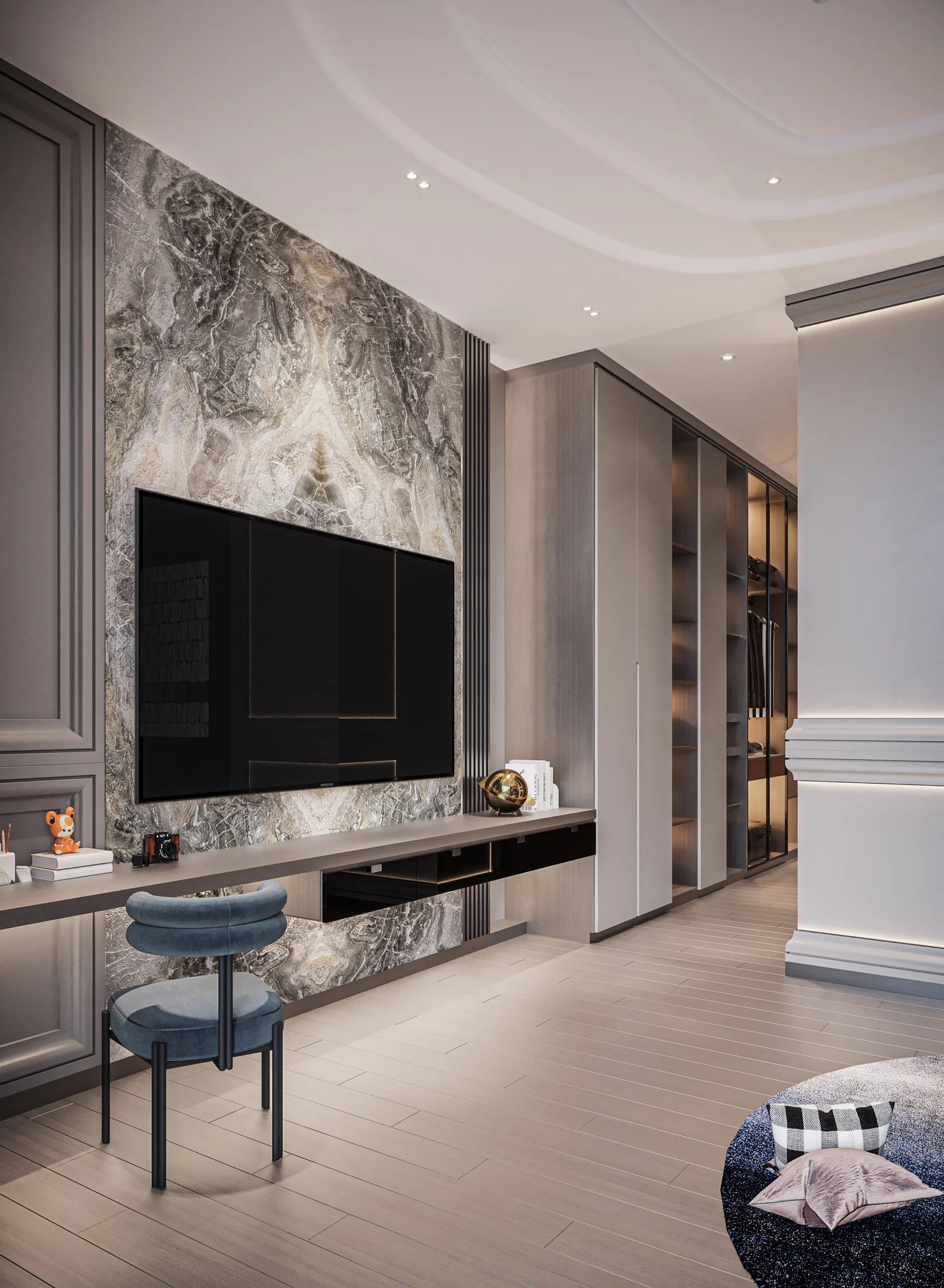
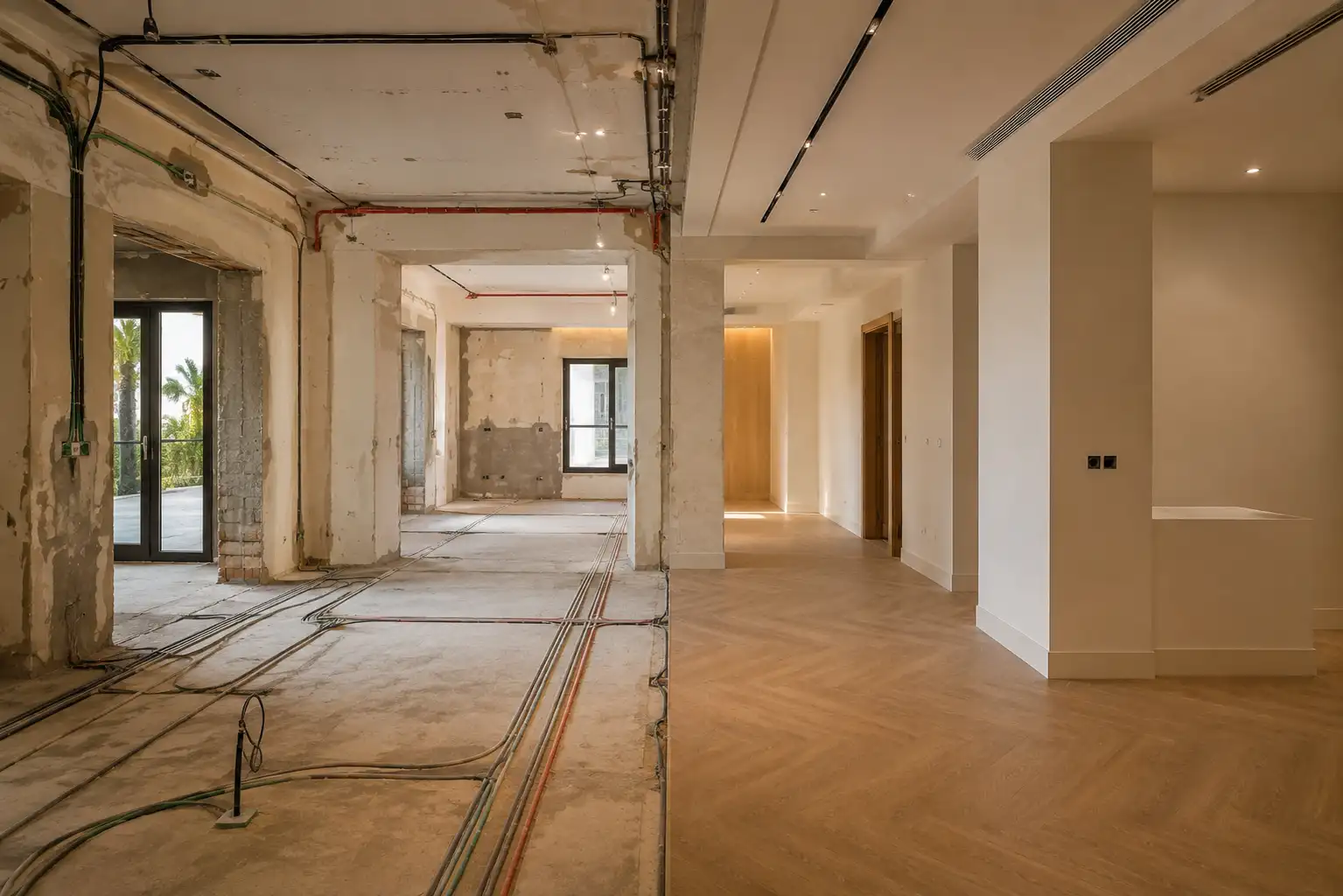
A home renovation in Dubai usually covers structural or layout changes, MEP updates, new flooring and finishes, kitchen and bathroom work, and any required permits or NOCs. It typically includes a site assessment, design and approval stage, construction and fit-out work, and a final snagging check before handover. Furniture and styling are often scoped separately.
Key takeaway:
A renovation in Dubai isn’t just fresh paint. Once it involves layout changes, MEP work or permits, it becomes a construction project with its own approval process, not a weekend refresh.
A home renovation in Dubai can mean anything from swapping out a kitchen to reworking an entire villa’s layout. What actually falls under that term varies more than most homeowners expect.
Confusion here usually comes from the gap between a light refresh and a full renovation. A full renovation involves permits, MEP work and structural changes. Those are very different projects, even though people use the same word for both.
Knowing what a home renovation in Dubai usually includes helps you scope a project accurately before getting quotes. It also helps you spot a quote that’s missing something important.
This breaks down what a Dubai renovation usually includes, how it differs from a makeover, and what it typically costs.
What Counts as a “Home Renovation” in Dubai?
A home renovation covers work that changes or upgrades an already-finished home, rather than building out a bare shell. That can range from a single kitchen upgrade to reworking an entire villa’s layout and systems.
In Dubai, renovation work involving structural changes, MEP alterations or certain approvals usually needs authority sign-off before work starts. Cosmetic updates, like paint or flooring, typically don’t.
Renovation vs Makeover vs Fit-Out
These three terms overlap in everyday use, but they describe different scopes of work. A detailed comparison of fit-out and renovation covers the fit-out side in more depth. The short version sits in the table below.
| Term | What It Covers |
|---|---|
| Makeover | Cosmetic refresh paint, décor, small furniture swaps, no structural or MEP work |
| Renovation | Updating finishes, layout and systems in an already-finished home, often with permits |
| Fit-Out | Construction and installation inside a bare or partial shell that isn’t finished yet |
What a Dubai Home Renovation Usually Includes
A typical renovation scope covers five connected stages, whether it’s one room or a whole villa.
Site Assessment and Design
This stage covers surveying the existing space, confirming what can change, and developing a design that fits the budget. It sets the direction for everything that follows.
Permits and Approvals
Structural changes, MEP alterations and certain finish changes in Dubai often require approvals before work starts. A construction supervision checklist for UAE projects shows how closely teams track this once work is underway.
MEP Updates
Older properties often need updated wiring, plumbing or AC systems before new finishes go in. Skipping this step to save money is one of the most common regrets homeowners mention afterward.
Structural and Layout Changes
This covers moving or removing walls, changing room layouts, or extending a space. It’s usually the most heavily regulated part of a Dubai renovation, and the part most likely to need formal approval.
Finishes, Kitchen and Bathroom Work
This covers flooring, paint, cabinetry, tiling and fixtures the visible layer most people associate with renovation. Understanding a typical kitchen renovation cost in Dubai helps set realistic expectations early.
Bathrooms follow a similar pattern, with plumbing changes adding significantly more cost and time than a surface-level refresh. A bathroom renovation cost guide for the UAE breaks down where that extra cost usually comes from.
Villa vs Apartment Renovation: What Changes
Villa renovations in Dubai usually have more flexibility on structural changes, since there’s no shared building management to coordinate with. Owners can often reconfigure entire floors if the layout calls for it.
Apartment renovations in Dubai work within fixed building systems and usually need management approval before structural work starts. That approval step often adds real time to the schedule.
A Dubai Scenario: Renovating an Older Villa
Consider a family who bought a ten-year-old villa in Al Barsha with dated finishes throughout. The kitchen and bathrooms still worked, but the layout felt closed off. Nobody had touched the wiring since the builders finished the property.
The renovation started with a full site assessment, which flagged the electrical system as a priority before anything cosmetic. Once permits for the layout change and electrical work came through, the project moved into structural work. Finishes came next, then furniture.
Common Renovation Mistakes to Avoid
A few mistakes come up repeatedly on Dubai renovation projects:
- Starting cosmetic work before permits for structural or MEP changes come through
- Skipping an electrical or plumbing check on an older property
- Underestimating how much a layout change affects the overall timeline
- Choosing finishes before confirming what the structure can actually support
- Treating a renovation like a makeover and scoping it too lightly
A closer look at common interior design challenges in the UAE covers several of these, especially around approvals.
How Renovation Scope Affects Cost and Timeline
Cost depends far more on scope than on square footage. Moving plumbing or knocking down a wall costs far more than resurfacing a room the same size.
A detailed look at villa renovation costs in Dubai helps set a realistic budget before you make scope decisions. Timeline follows the same pattern permits and structural work add weeks that a cosmetic refresh never needs.
Frequently Asked Questions
Q1: What does a typical home renovation in Dubai include?
A: It usually covers a site assessment, design, required permits, MEP updates, structural changes, and finishes like flooring, cabinetry and tiling. Furniture and styling are often scoped as a separate stage.
Q2: Does a home renovation in Dubai need permits?
A: It depends on scope. Structural changes, MEP alterations and certain layout changes usually need approval from the relevant authority. Cosmetic updates like paint or flooring typically don’t.
Q3: What’s the difference between a renovation and a makeover?
A: A makeover is a cosmetic refresh paint, décor, small furniture changes, with no structural or MEP work involved. A renovation goes further, often changing layout, systems or structure, and usually requires permits.
Q4: How long does a full home renovation take in Dubai?
A: A cosmetic refresh can take a few weeks. A full renovation with structural changes and permits often runs several months from approval to handover.
Q5: Is renovating a villa different from renovating an apartment in Dubai?
A: Yes. Villas usually allow more structural flexibility, since there’s no shared building management involved. Apartments work within fixed building systems and typically need management approval before structural work can start.
CONCLUSION
Ready to Scope Your Dubai Home Renovation Properly?
A home renovation in Dubai is easiest to manage when the scope is clear from day one. That means knowing what’s included, what needs approval, and what’s likely to cost more than expected.
La Firma’s home interior design team can assess your property and put together a scope that matches what it needs.