Quick Answer:
Dubai kitchens that hold up best combine climate-smart materials such as honed stone and matte cabinetry with a layout built around how the household actually cooks, whether that means a separate wet kitchen, a butler’s pantry, or better ventilation. This guide is written for villa owners across Dubai, Sharjah, and Abu Dhabi planning a full kitchen renovation or upgrading specific elements.
Introduction
I’ve sat through enough kitchen renovation conversations with Dubai homeowners to notice a pattern. Everyone starts with a Pinterest board full of European or American kitchens, and halfway through the project, someone realizes those ideas simply don’t hold up here. The heat, the humidity, and the way families actually cook and entertain in this part of the world rarely get factored into a photo taken in a cooler climate with a different lifestyle.
This is a set of kitchen design ideas that keep coming up on actual villa projects across the UAE, the kind of decisions homeowners are glad they made a year after moving back into their renovated kitchen. Whether you’re weighing up a full Home Interior Design overhaul or fixing one specific frustration, there’s something here worth considering.
Why Kitchens in Dubai Don’t Work Like They Do Elsewhere
A kitchen that looks stunning in a European showroom can be a genuine headache in a Dubai villa. According to Dubai’s Government Media Office, the emirate carries an average annual humidity of around 59 percent, climbing to roughly 65 percent in January and February, with summer highs regularly passing 41°C. Heat and moisture from cooking need somewhere to go, which isn’t always solved by a bigger extractor hood alone.
A lot of Emirati and expat households also cook with strong spices and oils daily, which is exactly why the wet kitchen, tucked behind the main showpiece kitchen, never went out of fashion here the way it did elsewhere.
Entertaining habits play a role too. A kitchen often doubles as a social hub during the day and turns into a full working kitchen the moment guests arrive. Ignore that shift and you end up with a beautiful room that’s genuinely annoying to use.
There’s also something homeowners rarely mention up front: staffing. In plenty of Dubai and Abu Dhabi households, domestic help handles the bulk of daily cooking, which changes where things need to sit and whose opinion should carry weight during planning.
10 Kitchen Design Ideas Worth Considering
1. Dual Kitchen Layouts for Heavy Cooking Households
A main show kitchen connected to the living space, paired with a smaller wet kitchen tucked out of sight, is still the setup most villa owners in Dubai and Sharjah choose. It keeps strong smells away from guest areas and gives you a pleasant space for lighter meals. It adds a layer to the layout planning and usually means coordinating separate Fit-Outs for each space, but almost nobody regrets it.
2. Waterfall Islands With Honed Stone
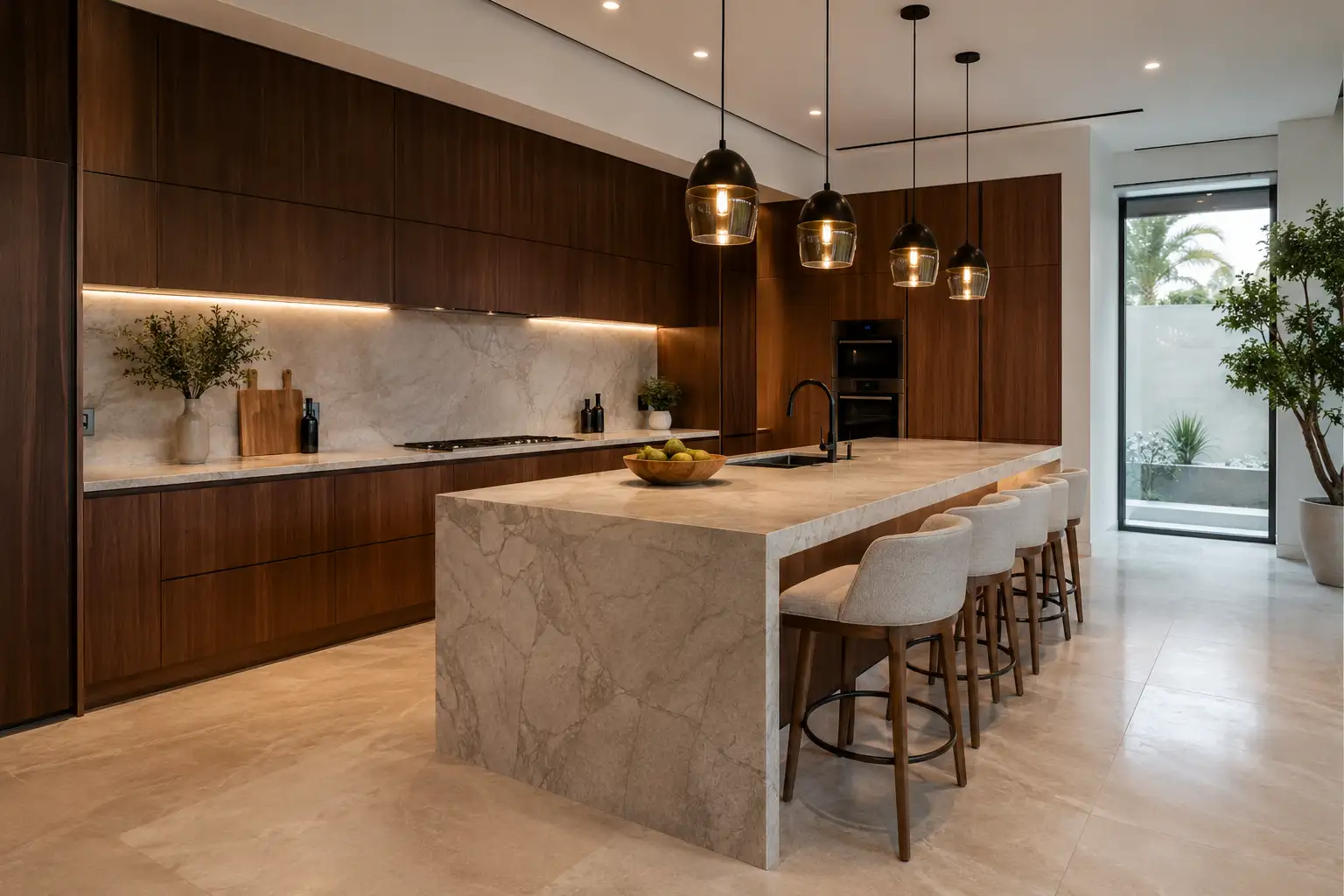
The waterfall edge, where the stone drops straight down the side of the island to the floor, remains one of the most requested features on high end projects. Honed finishes are winning out over polished ones because they don’t show fingerprints and water spots the way glossy surfaces do in a kitchen used daily.
3. Warm Wood Tones Instead of Pure White
White kitchens photograph beautifully. They also show every speck of dust within about a year, which is a real problem in a climate this dusty and humid. Warm oak, walnut, or smoked timber tones paired with matte stone are proving far more forgiving while still looking current.
4. Concealed Appliance Walls
Hiding the refrigerator, oven, and coffee machine behind matching cabinetry gives a kitchen a calmer, more expensive look. It works particularly well in open plan villas where the kitchen sits in full view of the dining and living areas, with less visual clutter competing against the furniture around it.
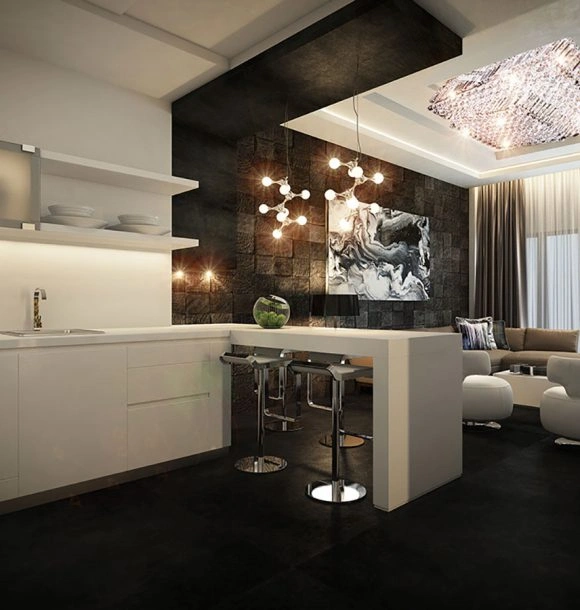
5. Layered Lighting Instead of a Single Ceiling Fixture
One bright ceiling light makes a kitchen feel clinical. Combine recessed downlights, under cabinet task lighting, and a statement pendant over the island, and the same room feels warm in the evening and functional during the day. It’s one of the cheapest upgrades with the biggest visible payoff.
6. Butler’s Pantries for Prep and Storage
A small enclosed prep and storage room tucked behind the main kitchen has become close to standard in larger villas. It keeps small appliances, bulk groceries, and prep chaos out of sight, which matters when your main kitchen is also where guests gather.
7. Matte and Textured Cabinet Finishes
High gloss cabinetry looks sharp in a showroom and shows every smudge under Dubai’s harsh natural light within weeks. Matte lacquer, textured laminates, and fluted timber panels age far more gracefully instead of looking tired after one humid summer.
8. Larger Islands With Two Distinct Purposes
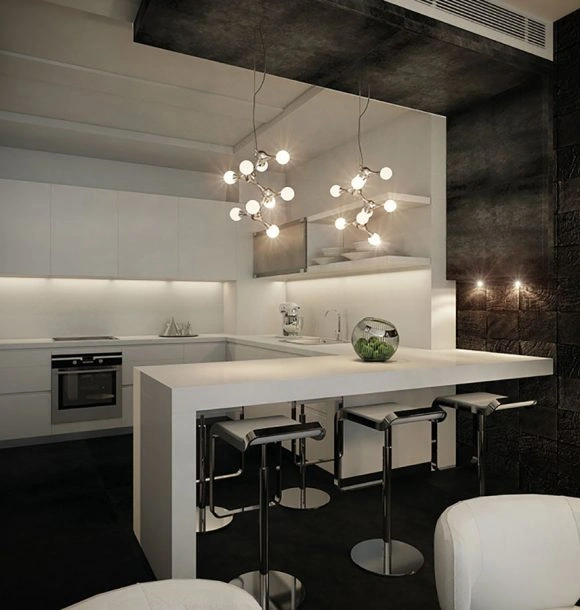
Islands keep getting bigger, but smarter layouts split the surface into a working prep zone and a separate seating zone. Pairing that seating with the right furniture, upholstered stools rather than standard bar chairs, makes the island usable for cooking and casual dining rather than a centerpiece nobody sits at.
9. Natural Ventilation Alongside Mechanical Extraction
Even with a strong extractor hood, plenty of homeowners are adding operable windows or ventilation panels near the cooking zone. Mechanical extraction alone often isn’t enough for households that fry or grill regularly, and lingering odors remain a common complaint once the renovation excitement has worn off.
10. Storage That Actually Matches How You Cook
Pull out spice racks, vertical tray dividers, and deep drawers instead of standard lower cabinets sound like small details. Ask homeowners a year later what their favorite feature is, and this is usually it. Generic storage copied from a showroom rarely matches how a family actually cooks.
Which Finish Suits Your Kitchen? A Quick Comparison
Material choice is where homeowners spend the most time deliberating, and the trade-offs aren’t always obvious from a sample swatch. Here’s how common options compare for a household that cooks daily.
| Finish | Best For | Maintenance in UAE Climate | Typical Lifespan |
|---|---|---|---|
| Honed natural stone | Islands, waterfall edges | Low, hides marks well | 15 to 20 years |
| Polished stone | Formal, lower-use kitchens | Higher, shows marks fast | 15 to 20 years |
| Matte lacquer cabinetry | Daily cooking households | Low, wipes clean easily | 10 to 15 years |
| High gloss cabinetry | Showroom-style kitchens | High, needs frequent wiping | 8 to 12 years |
| Engineered quartz | High traffic islands | Low, sealed and stain resistant | 15 to 25 years |
Common Kitchen Design Mistakes UAE Homeowners Make
A handful of patterns show up again and again on projects across the Emirates. Choosing finishes purely because they looked good in a catalogue, without asking how they’ll perform daily, is one. Underestimating ventilation needs, which surfaces months later as a lingering smell, is another. So is treating the kitchen Fit-Outs as separate from the rest of the villa, which leaves the kitchen feeling visually disconnected from the rooms around it.
Coordinating Fit-Outs across the whole home, rather than isolating the kitchen, produces a more cohesive result and saves expensive rework later. It also helps to have someone handling Project Management across the trades, since electrical, plumbing, and joinery all need the same schedule for a renovation to finish on time.
A fourth mistake is underestimating lead times for custom cabinetry and furniture. Bespoke joinery ordered from overseas can take eight to twelve weeks, and homeowners who plan around local expectations often end up without a working kitchen far longer than planned. A buffer at the planning stage saves frustration later.
Who This Guide Is Really For
This is aimed at a villa owner in Dubai, Abu Dhabi, or Sharjah who has booked a renovation, is scoping one out, or needs to brief a designer. The list above is grounded in how these kitchens perform after the first year, not just on handover day.
What This Means for Your Renovation
You don’t need all ten at once. A more realistic approach is picking the two or three that solve your actual daily frustration, whether that’s poor ventilation, not enough storage, or a layout that never suited how your family cooks. Decent Project Management behind the scenes is usually what separates a smooth six week renovation from one that drags on for three months.
Frequently Asked Questions
Is a separate wet kitchen still necessary in a modern Dubai villa?
Short answer: usually yes, if you cook daily. Households that use strong spices or entertain often still get real value from one, while smaller families who cook lighter meals may not need it.
What kitchen finishes hold up best against Dubai’s climate and humidity?
Short answer: honed stone and matte cabinetry. Both outperform high gloss or polished finishes, which show marks and water spots far more easily over time.
How long does a full kitchen renovation typically take in a UAE villa?
Short answer: six to ten weeks. That range depends on scope, custom furniture and joinery lead times, and whether any structural or plumbing changes are involved.
Should I renovate my kitchen separately or as part of a full villa update?
Short answer: as part of a full update, if budget allows. Coordinating the kitchen with adjoining living areas through proper Home Interior Design planning usually gives a more cohesive result.
Are open kitchens still practical for UAE households that cook daily?
Short answer: yes, but only with strong ventilation and, ideally, a secondary prep space. Without that combination, cooking smells and mess tend to drift into living areas more than expected.
Conclusion
Kitchen design in Dubai has moved well past copying international trends off a screen. The homeowners who end up genuinely happy with their renovation plan around their actual cooking habits and the climate realities documented by sources like Dubai’s Government Media Office, rather than choosing finishes for how they photograph. Working through layout, furniture, and material choices with an experienced Home Interior Design and Project Management team early on prevents the most common mistakes.
- Best Interior Design Company Dubai: Learn More
- Office Interior Design Dubai UAE: Office Solutions